
RASTAHASHINDEPENDENT MINING JOURNALCryptoWatch
Back to journal

RASTAHASH / REVIEWS · BITAXE GAMMA

Bitaxe Gamma v601: cool copper, lively fans

A chunky copper cooler, a little Bitcoin engine and fans with plenty to say. My 48-hour SuperSink OC test found a steady groove around 1.7 TH/s — after giving the settings a little less espresso. Good cooling, honest watts and a few rough edges.
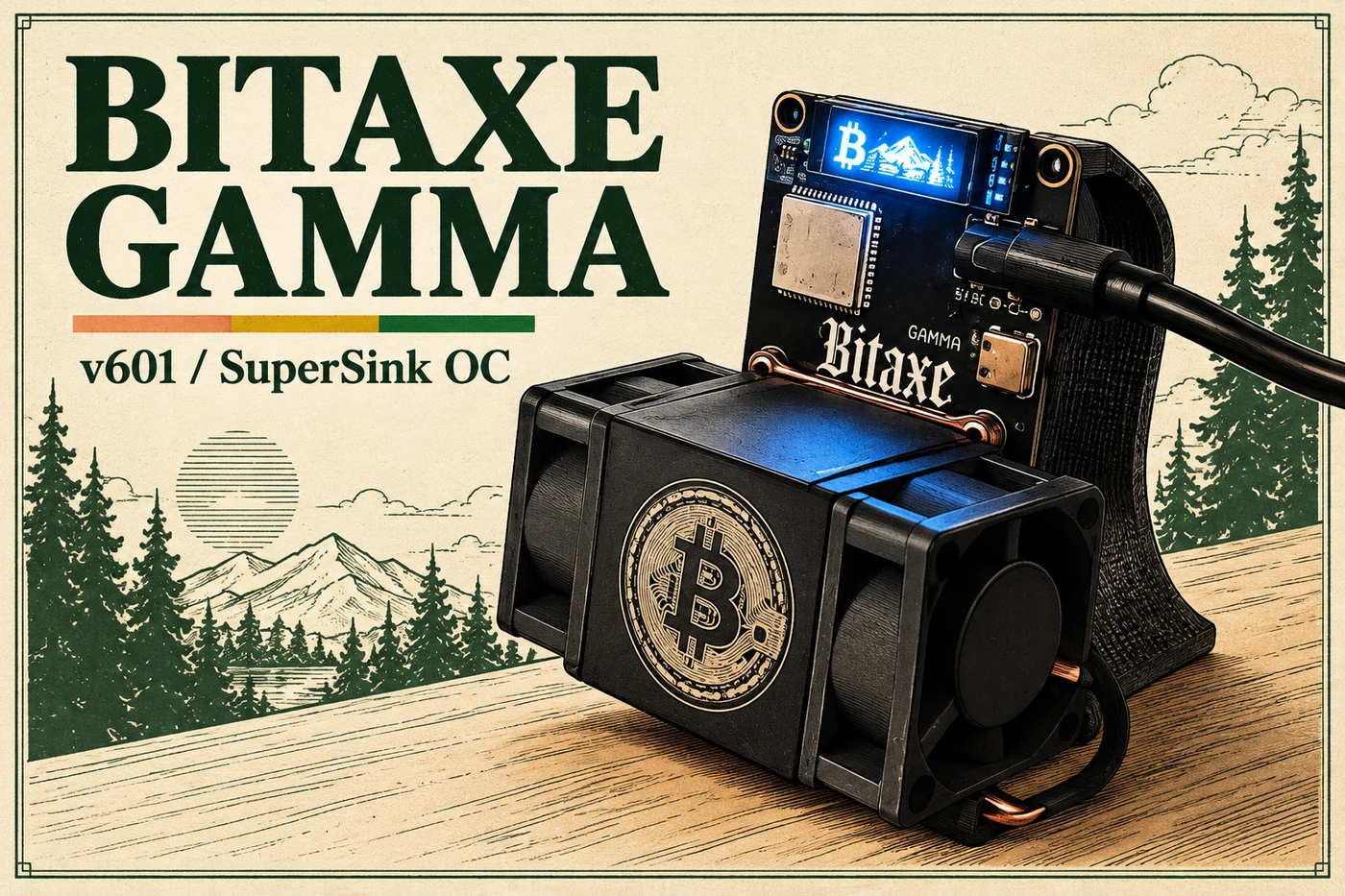
Illustration of my Bitaxe Gamma v601 with SuperSink cooling
AI-designed cover based on my hardware photos. Unaltered original photos and AxeOS screenshots appear below; the illustration is not a measurement photograph.

This personal retrospective documents my test on 26–28 January 2026. It ran AxeOS 2.12.2 and firmware 2.12.2 at the time; these are the test versions, not a claim about today’s software. Published in the journal on 7 October 2026.

The little miner at a glance

My device and setup: observations and the historical seller rating are listed separately.
Test period26–28 January 2026 · 48 hours
DeviceBitaxe Gamma v601 · SuperSink Overclocker Edition
My sustained operation825 MHz / 1.165 V
Hashrate reported across the 48h testabout 1.66–1.70 TH/s
Power reported by AxeOSabout 34 W
Average efficiencyabout 20–21 J/TH
Stale sharesabout 0.05%
Hashrate advertised at the time1.9 TH/s · not reached in my test
Included power supply5.2 V / 8 A · 41.6 W rated output

The Gamma platform uses the BM1370, so this is a different generation from the BM1373 newcomers in my recent roundup. Background on the open hardware project: official Bitaxe Gamma repository ↗. SuperSink and the extra cooling describe the configuration of my particular unit.
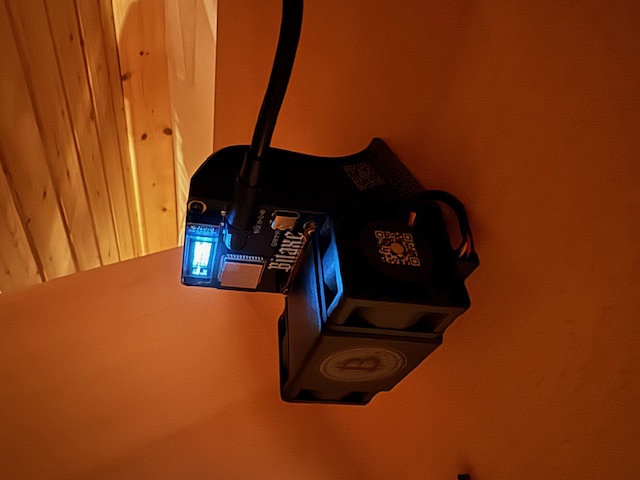
My Bitaxe Gamma v601 at its first setup, with the large front fan and display
My original photograph of the first setup. Click to open the original file.

Delivery is good. A complete delivery is better.

I ordered on 16 January, when the unit was listed as in stock. The parcel arrived on 23 January: well packed, with an uncomplicated ordering process. The German mains adapter was missing, though. After I contacted support, it arrived on 26 January, ten days after the order. Not a disaster, but the little hash contender spent a few days on the bench. This describes my delivery experience, not a general verdict on a retailer.

Copper muscles — with a little front-heavy balance

The hefty SuperSink copper block, two GELID fans in a push-pull arrangement and extra voltage-regulator cooling make a solid impression. I like the finish and cast-aluminium frame. The cooling assembly puts plenty of weight at the front, though: in my setup, the unit could tip forwards without the power lead routed behind it. The cable acted as a counterweight. Secure placement matters here; a power cable should not have to audition as a stand.

A little less espresso for the chip

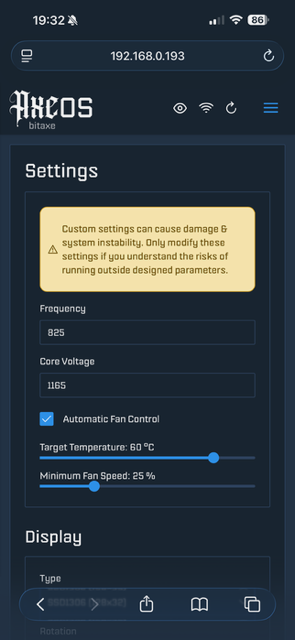
My unit arrived set to 925 MHz and 1.200 V. AxeOS reported approximately 40 W, and the included supply felt very hot. Its 41.6 W rated output sits numerically close to that figure. This does not establish a defect, and I did not measure the supply temperature, but I wanted more breathing room for everyday use.

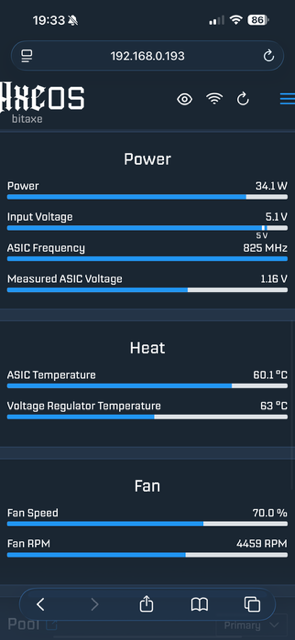
I reduced the settings to 825 MHz and 1.165 V. AxeOS then showed around 34 W, and the miner ran steadily during the 48-hour test. These are device-reported figures, not separately measured wall-power readings. The settings document my test rather than a universal preset for every Gamma. A correctly specified supply with more headroom would be interesting for a future test, retaining the correct voltage and connector. I did not benchmark a replacement supply here.
48 hours in a steady hash groove

Across the test I recorded roughly 1.66–1.70 TH/s, averaging around 20–21 J/TH. The stale rate was approximately 0.05%. The dashboard shown below reads 1.64 TH/s at that instant and 1.68 TH/s over one hour; its efficiency reads 21.91 J/TH instantaneously and 20.39 J/TH on average. That fits the wider observation: a screenshot is one beat; the 48-hour report is the longer playlist.
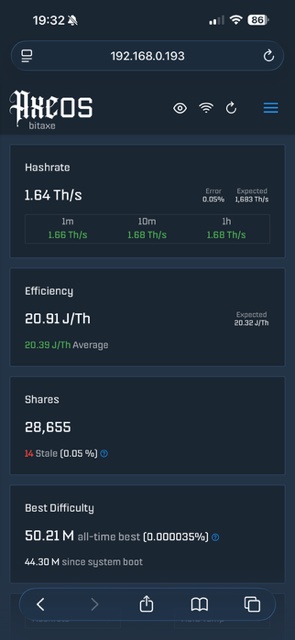
Original AxeOS hashrate and efficiency display from my January test
Unaltered screenshot: 1.68 TH/s over one hour and 20.39 J/TH average efficiency. Instantaneous and average values are labelled separately.

I did not reach the 1.9 TH/s advertised at the time with my reduced operating point. This alone does not prove that the supply caused the entire difference. 1.8–1.9 TH/s with a different supply remains an unconfirmed expectation, not a result of this test. The desk delivered about 1.7 TH/s; anything beyond that needs its own experiment.

The chip stays cool. My ears stay awake.

The cooling works well, but the fans are clearly audible to me. My notes record approximately 41 dB; without a documented distance and standardised measurement method, that is an indicative reading from my setup, not a laboratory comparison. I found the sound distracting even a few metres away in an open landing/sleeping area. Good hashes are welcome; a miniature wind tunnel beside the pillow is a tougher sell.
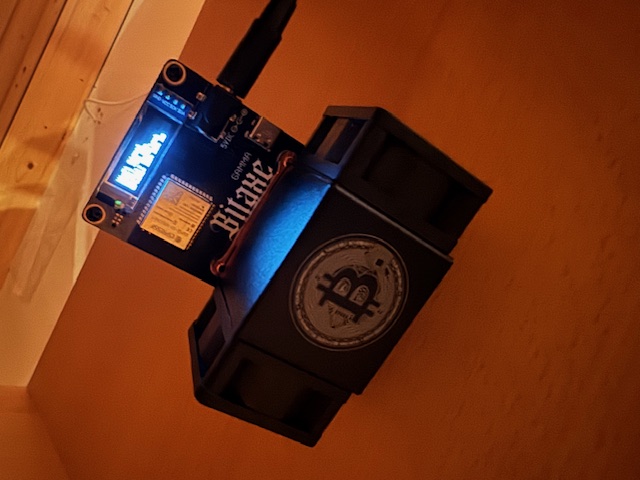
My Bitaxe Gamma in operation, with its front fan and substantial cooler
A second original photograph of my unit in operation. Not a generated product photograph.

What stays with me?

Good vibes

  • Substantial cooling, extra regulator cooling and a tidy finish.
  • Steady 48-hour operation at my reduced settings.
  • Around 1.7 TH/s at approximately 34 W reported by AxeOS; roughly 20–21 J/TH on average.

The scratchy notes

  • The supplied power adapter felt very hot at the delivered operating point.
  • The fan noise is a poor match for my sleeping area.
  • The missing adapter delayed the test, and the front-heavy balance needs attention.

My verdict: light and shade, with plenty of tinkering enjoyment. After adjustment, this Gamma ran reliably during the observed test. I like the cooling; supply headroom, noise and balance could feel more comfortable in everyday use. An interesting little miner with character — the coffee still goes to me, while the chip gets a little less voltage. Hash. Learn. Repeat.

RASTAHASH / REVIEWS · BITAXE GAMMA

Bitaxe Gamma v601: viel Kupfer, kühler Chip — und hörbare Lüfter

Ein dicker Kupferkühler, ein kleiner Bitcoin-Motor und Lüfter mit ordentlich Gesprächsbedarf. Mein 48-Stunden-Test der SuperSink-OC-Version fand bei rund 1,7 TH/s seinen entspannten Rhythmus — nachdem die Einstellungen etwas weniger Espresso bekamen. Gute Kühlung, ehrliche Watt und ein paar Ecken und Kanten.

Illustration meines Bitaxe Gamma v601 mit SuperSink-Kühler
KI-gestaltetes Titelbild auf Basis meiner Gerätefotos. Die unveränderten Originalaufnahmen und AxeOS-Screenshots folgen im Bericht; die Illustration ist keine Messaufnahme.

Dieser persönliche Rückblick dokumentiert meinen Test vom 26. bis 28. Januar 2026. Damals liefen AxeOS 2.12.2 und Firmware 2.12.2; das sind die Versionen im Test, keine Aussage zum heutigen Softwarestand. Veröffentlicht im Journal am 7. Oktober 2026.

Der kleine Miner auf einen Blick

Mein Gerät, mein Aufbau: Messwerte und damalige Anbieterangabe getrennt aufgeführt.
Testzeitraum26.–28.01.2026 · 48 Stunden
GerätBitaxe Gamma v601 · SuperSink Overclocker Edition
Mein Dauerbetrieb825 MHz / 1,165 V
Hashrate im 48h-Testca. 1,66–1,70 TH/s
Leistungsaufnahme laut AxeOSca. 34 W
Effizienz im Mittelca. 20–21 J/TH
Stale Sharesca. 0,05 %
Damals beworbene Hashrate1,9 TH/s · im Test nicht erreicht
Beiliegendes Netzteil5,2 V / 8 A · 41,6 W Nennleistung

Die Gamma-Plattform setzt auf den BM1370. Sie gehört also nicht zu den BM1373-Neuheiten aus meinem jüngsten Rundblick. Hintergrund zum offenen Hardwareprojekt: offizielles Bitaxe-Gamma-Repository ↗. SuperSink und die zusätzliche Kühlung beschreiben hier die Ausstattung meines konkreten Geräts.

Mein Bitaxe Gamma v601 bei der ersten Aufstellung mit großem Frontlüfter und Display
Meine Originalaufnahme der ersten Aufstellung. Bild anklicken für die Originaldatei.

Ankommen ist schön. Vollständig ankommen ist schöner.

Bestellt hatte ich am 16. Januar, damals als vorrätig angeboten. Am 23. Januar kam das Paket: gut verpackt, der Bestellablauf unkompliziert. Nur der deutsche Steckdosenadapter fehlte. Nach meiner Meldung wurde er am 26. Januar nachgeliefert. Damit startete der Test zehn Tage nach der Bestellung. Kein Weltuntergang, aber der kleine Hash-Kandidat musste erst einmal auf der Ersatzbank sitzen. Das ist meine Erfahrung mit dieser Lieferung, keine pauschale Bewertung eines Händlers.

Ein kräftiger Kupferkühler mit Hang nach vorn

Der massive SuperSink-Kupferblock, zwei GELID-Lüfter im Push-Pull-Aufbau und die zusätzliche Kühlung am Spannungsregler machen einen soliden Eindruck. Die Verarbeitung und der Aluguss-Rahmen gefallen mir. Das Kühlpaket bringt allerdings viel Gewicht nach vorn: In meinem Aufbau konnte das Gerät ohne das nach hinten geführte Stromkabel leicht kippen. Das Kabel wirkte als Gegengewicht. Eine standsichere Aufstellung gehört für mich deshalb dazu; ein Stromkabel sollte nicht den Job eines Standfußes übernehmen müssen.

Weniger Espresso für den Chip

Geliefert wurde mein Gerät mit 925 MHz und 1,200 V. AxeOS zeigte dabei ungefähr 40 W, das beiliegende Netzteil wurde nach meinem Eindruck sehr heiß. Seine Nennleistung von 41,6 W liegt zahlenmäßig nur knapp darüber. Das ist kein Nachweis eines Defekts und auch keine Messung der Netzteiltemperatur — mir war die Reserve im Alltag aber zu knapp.

Ich reduzierte auf 825 MHz und 1,165 V. Damit zeigte AxeOS rund 34 W, und der Miner lief im 48-Stunden-Test stabil. Diese Wattangaben stammen aus dem Gerät; sie sind keine separat gemessenen Steckdosenwerte. Die Einstellungen dokumentieren meinen Test und sind keine allgemeine Empfehlung für jedes Gamma-Gerät. Für einen späteren Versuch mit mehr Reserve wäre ein passend spezifiziertes Netzteil interessant — mit korrekter Versorgungsspannung und passendem Anschluss. Ein anderes Netzteil habe ich in diesem Test nicht vermessen.

48 Stunden im guten Hash-Rhythmus

Über den Testzeitraum notierte ich etwa 1,66 bis 1,70 TH/s und im Mittel 20 bis 21 J/TH. Die Stale-Rate lag bei ungefähr 0,05 %. Im abgebildeten Dashboard stehen 1,64 TH/s als Momentwert und 1,68 TH/s im Stundenmittel; die Effizienz beträgt dort 21,91 J/TH momentan und 20,39 J/TH im Mittel. Das widerspricht dem Testbereich nicht: Ein Screenshot ist ein einzelner Takt, der 48-Stunden-Bericht die längere Playlist.

Originale AxeOS-Hashrate und Effizienzanzeige aus meinem Januartest
Unveränderter Screenshot: 1,68 TH/s im Stundenmittel und 20,39 J/TH durchschnittliche Effizienz. Momentwerte und Durchschnittswerte sind getrennt beschriftet.

Die damals beworbenen 1,9 TH/s habe ich mit meinem reduzierten Betriebspunkt nicht erreicht. Die Ursache lässt sich daraus nicht allein dem Netzteil zuschreiben. 1,8–1,9 TH/s mit anderer Versorgung bleiben eine unbestätigte Erwartung, kein Ergebnis dieses Tests. Auf dem Tisch stehen gemessene rund 1,7 TH/s; alles darüber braucht erst einen eigenen Versuch.

Der Chip bleibt cool. Meine Ohren bleiben wach.

Die Kühlung funktioniert gut, die Lüfter sind für mich deutlich hörbar. Meine Notizen nennen ungefähr 41 dB; ohne dokumentierten Messabstand und einheitliches Messverfahren ist das ein Orientierungswert meines Aufbaus, kein Laborvergleich. Auch aus einigen Metern Entfernung empfand ich das Geräusch im offenen Galerie-/Schlafbereich als störend. Gute Hashes nehme ich gern — einen kleinen Windkanal neben dem Kopfkissen eher nicht.

Mein Bitaxe Gamma im Betrieb, mit Frontlüfter und großem Kühlkörper
Zweite Originalaufnahme meines Geräts im Betrieb. Keine generierte Produktaufnahme.

Was nehme ich aus dem Test mit?

Gute Vibes

  • Massive Kühlung, zusätzliche Reglerkühlung und saubere Verarbeitung.
  • Stabiler 48-Stunden-Betrieb bei meinen reduzierten Einstellungen.
  • Rund 1,7 TH/s bei etwa 34 W laut AxeOS; im Mittel etwa 20–21 J/TH.

Was mir weniger gefällt

  • Das beiliegende Netzteil wurde im Auslieferungsbetrieb sehr heiß.
  • Die Lüfter passen für mich schlecht in einen Schlafbereich.
  • Der fehlende Adapter verzögerte den Teststart; die kopflastige Gewichtsverteilung verlangt Aufmerksamkeit.

Mein Fazit: Licht und Schatten, aber echte Freude am Basteln. Nach der Anpassung lief dieser Gamma zuverlässig im beobachteten Test. Die Kühlung gefällt mir, bei Netzteilreserve, Geräusch und Aufstellung wünsche ich mir mehr Reserven für den Alltag. Für mich ein interessanter kleiner Miner mit Charakter. Der Kaffee bleibt für mich, der Chip bekommt etwas weniger Spannung. Hash. Learn. Repeat.